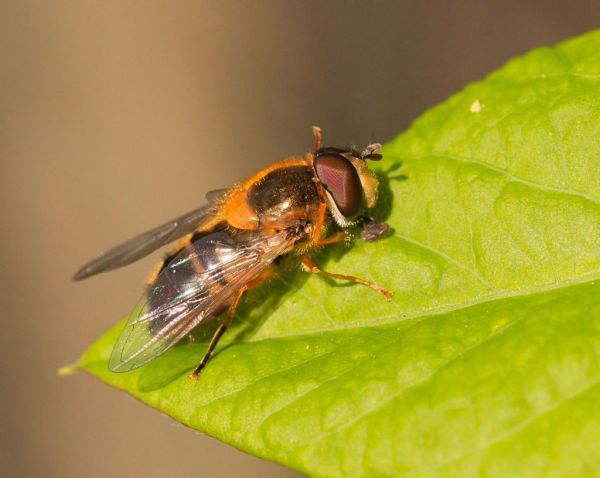
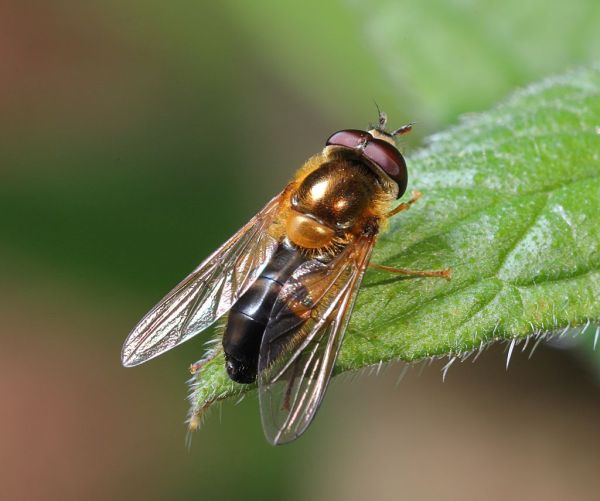
Epistrophe eligans (Harris, 1780)
Identification
Identification difficulty = 1. 
 according to Ball & Morris, 20241
Synonymy
Syrphus eligans Harris (bifasciatus Fabricius) in Coe(1953)2.
Biology
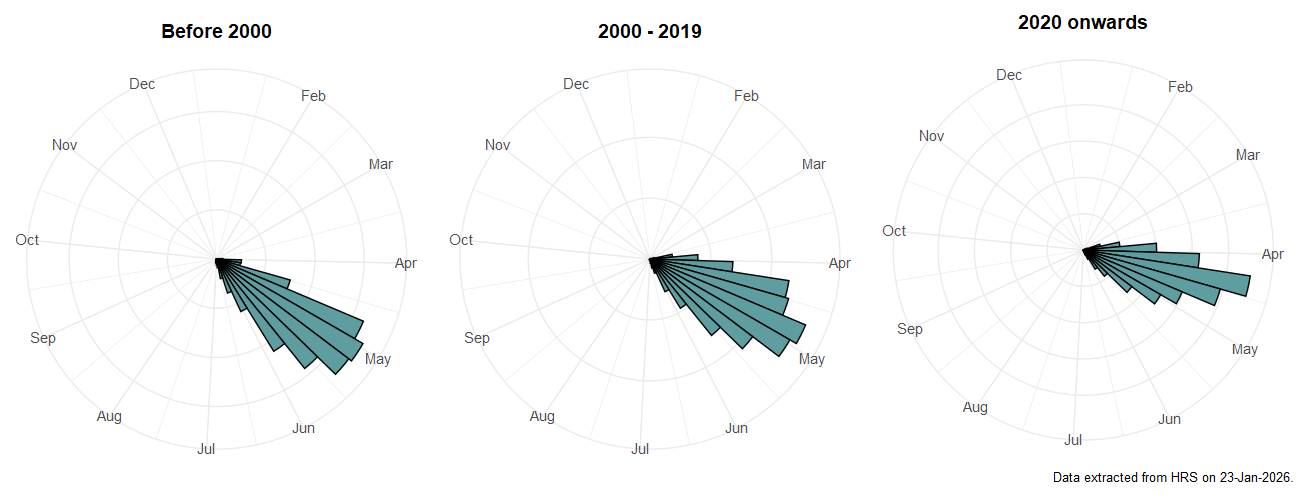
The flattened green larva is aphidophagous and mainly arboreal, but it also occurs on shrubs such as Elderberry, Sambucus nigra and bramble Rubus sp. Adults fly in the spring, hovering around, and visiting the flowers of trees and bushes, particularly Blackthorn Prunus spinosa and Hawthorn Crataegus sp. Males generally hover singly, or in small groups, beneath the branches of mature trees but on one or two days each year occur in great numbers. Woodland edges, scrub, orchards, mature hedgerows and larger gardens with well established trees are likely localities. The phenology of this species is changing in response to climate change and in south-east England it is not uncommon to record males in late March.
Flight period
The following plots show the number of unique records per week excluding those reported to be of immature stages.
Distribution
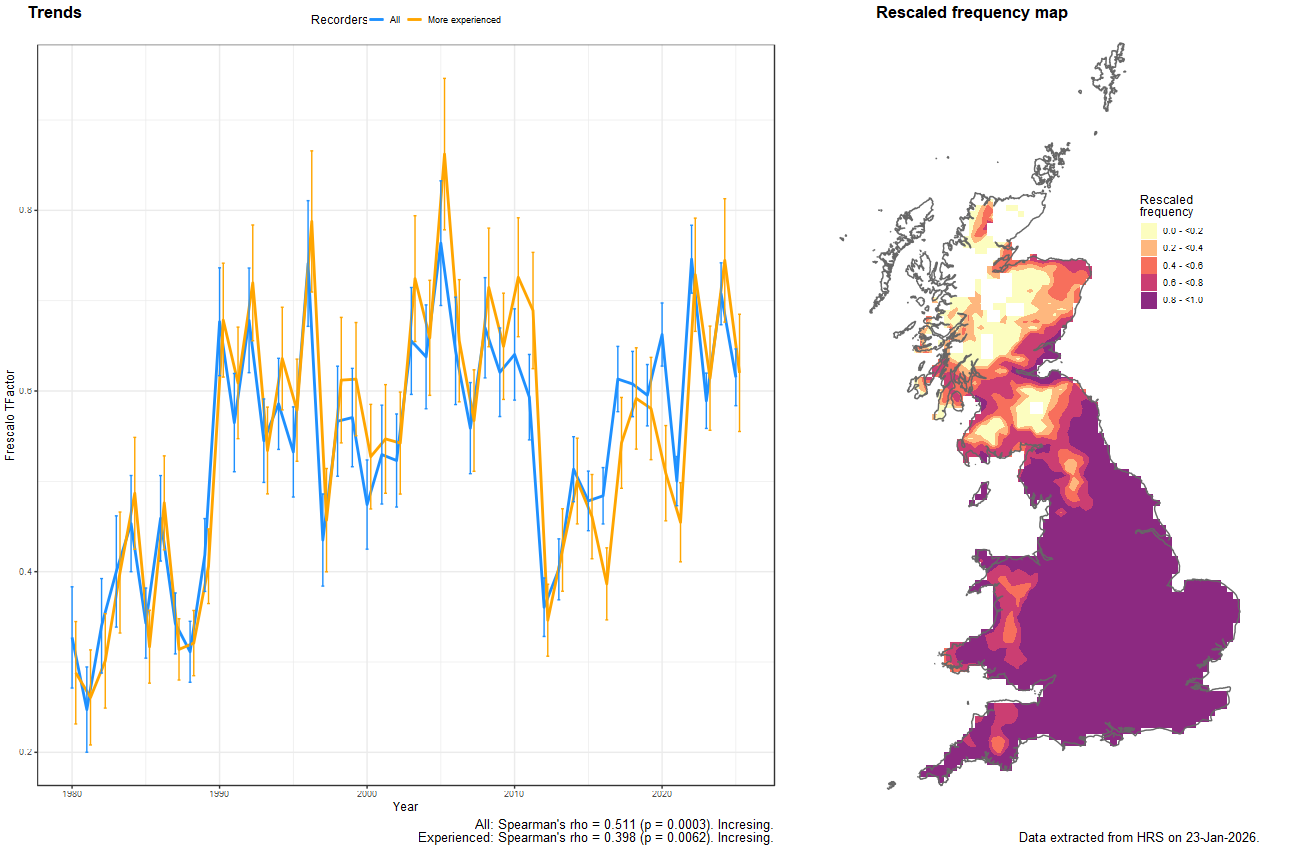
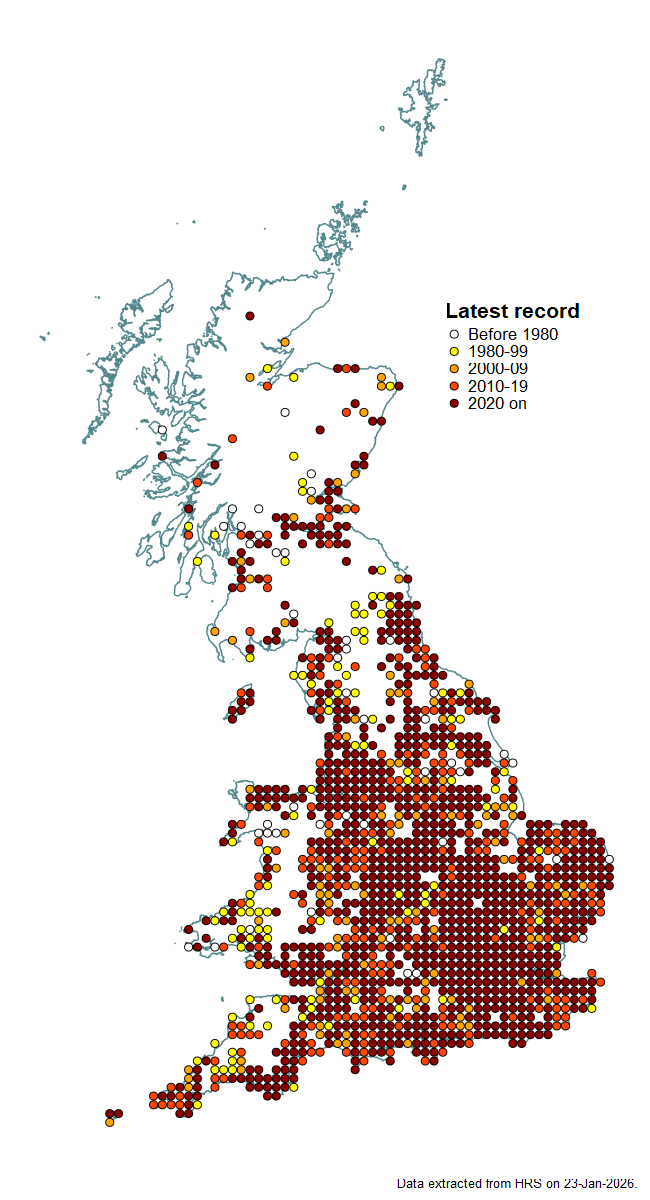
A characteristic early spring species throughout England and Wales, becoming scarcer in the extreme north of England. Scottish records are primarily from the Central Lowlands east to Aberdeenshire and are primarily from lowland and coastal locations. There has been some evidence of a northward expansion of range over recent decades.
Trends
The following plots show the Frescalo TFactor vs year and a map of the rescaled frequency (all records) for the species.