

Anasimyia contracta Claussen & Torp, 1980
Identification
Identification difficulty = 3. 
 according to Ball & Morris, 20241
Synonymy
This species was confused with A. transfuga before the review by Claussen & Torp (1980)2; older records are therefore suspect unless a specimen has been re-examined.
Biology
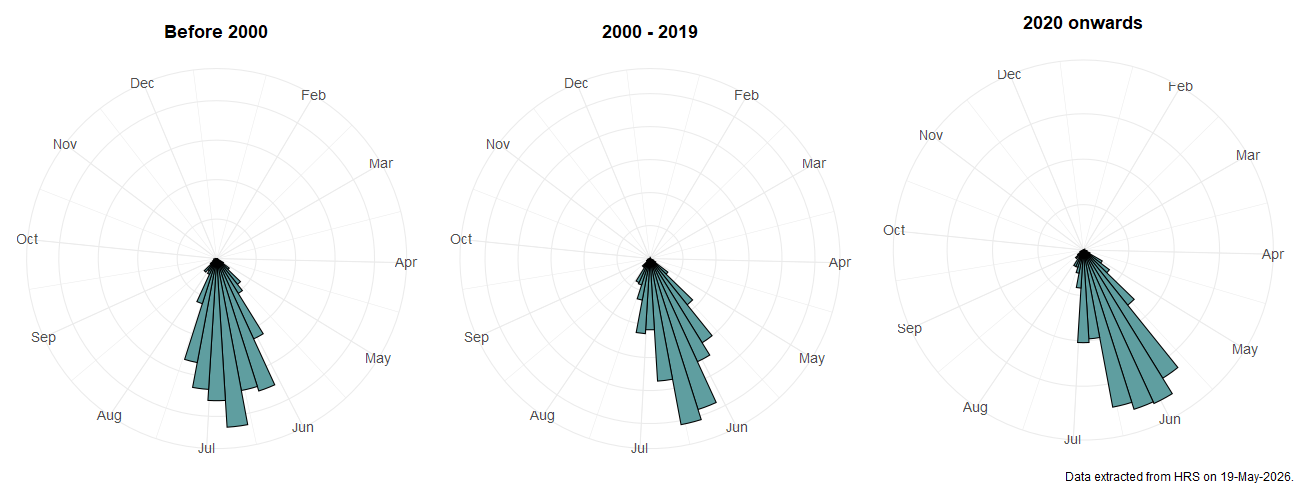
A lowland species associated with beds of emergent vegetation growing at the edges of ponds and slow moving rivers. The larva is unknown, but is thought to live in the saturated, decaying vegetable material found around the base of such plants. Adults seldom stray far from breeding sites and can be found sitting on leaves and visiting flowers. Adults fly in early summer with a peak in June and July.
Flight period
The following plots show the number of unique records per week excluding those reported to be of immature stages.
Distribution
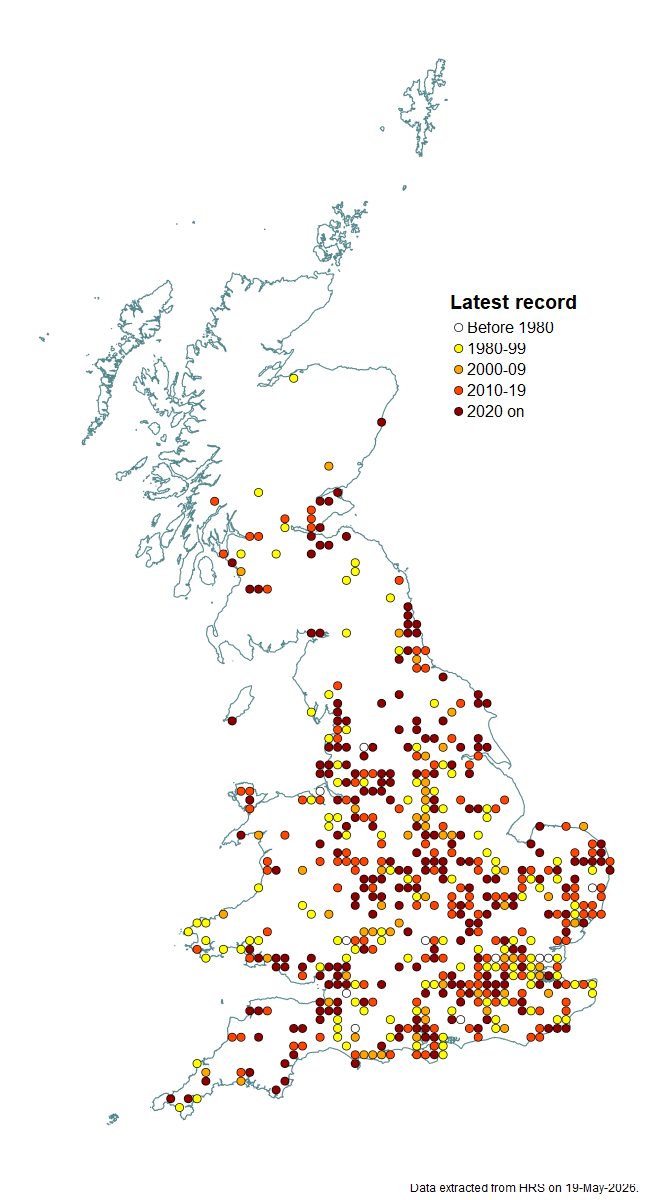
Widespread in the lowlands, especially along the courses and floodplains of river systems. The scarcity of records in northern England and Scotland appears to be genuine. The lack of records in the SW peninsular seems strange since it is widespread in the lowlands of Wales.
Trends
The following plots show the Frescalo TFactor vs year and a map of the rescaled frequency (all records) for the species.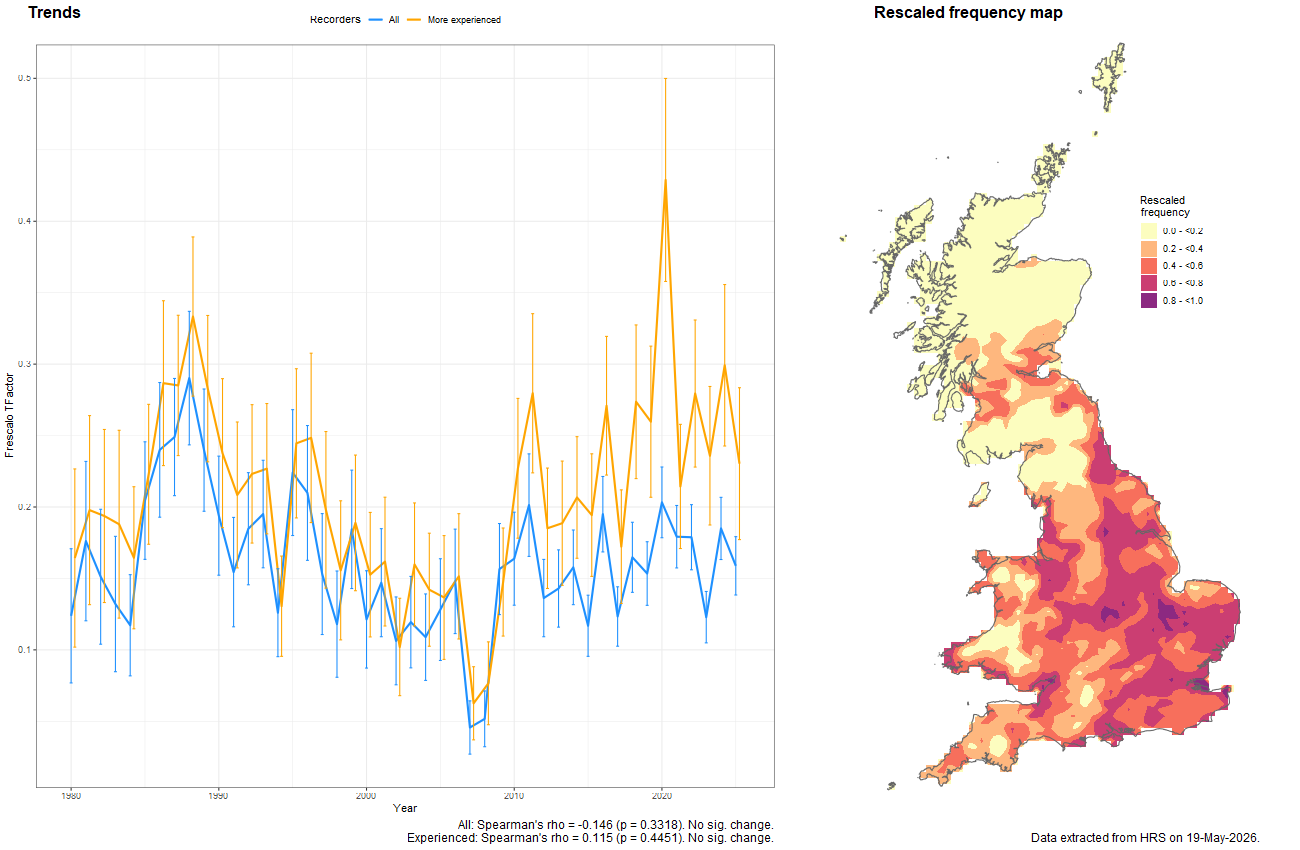
-
Ball, S., & Morris, R. (2024). Hoverflies of Britain and Ireland. WILDGuides (3rd ed.). Oxford: Princeton University Press. ↩
-
Claussen, C., & Torp, E. (1980). Untersuchungen uber vier europaische Arten der Gattung Anasimyia Schiner, 1864 (Insecta, Diptera, Syrphidae). Mitt. zool. Mus. Univ. Kiel., 1(4), 1–11. ↩